Quick answer
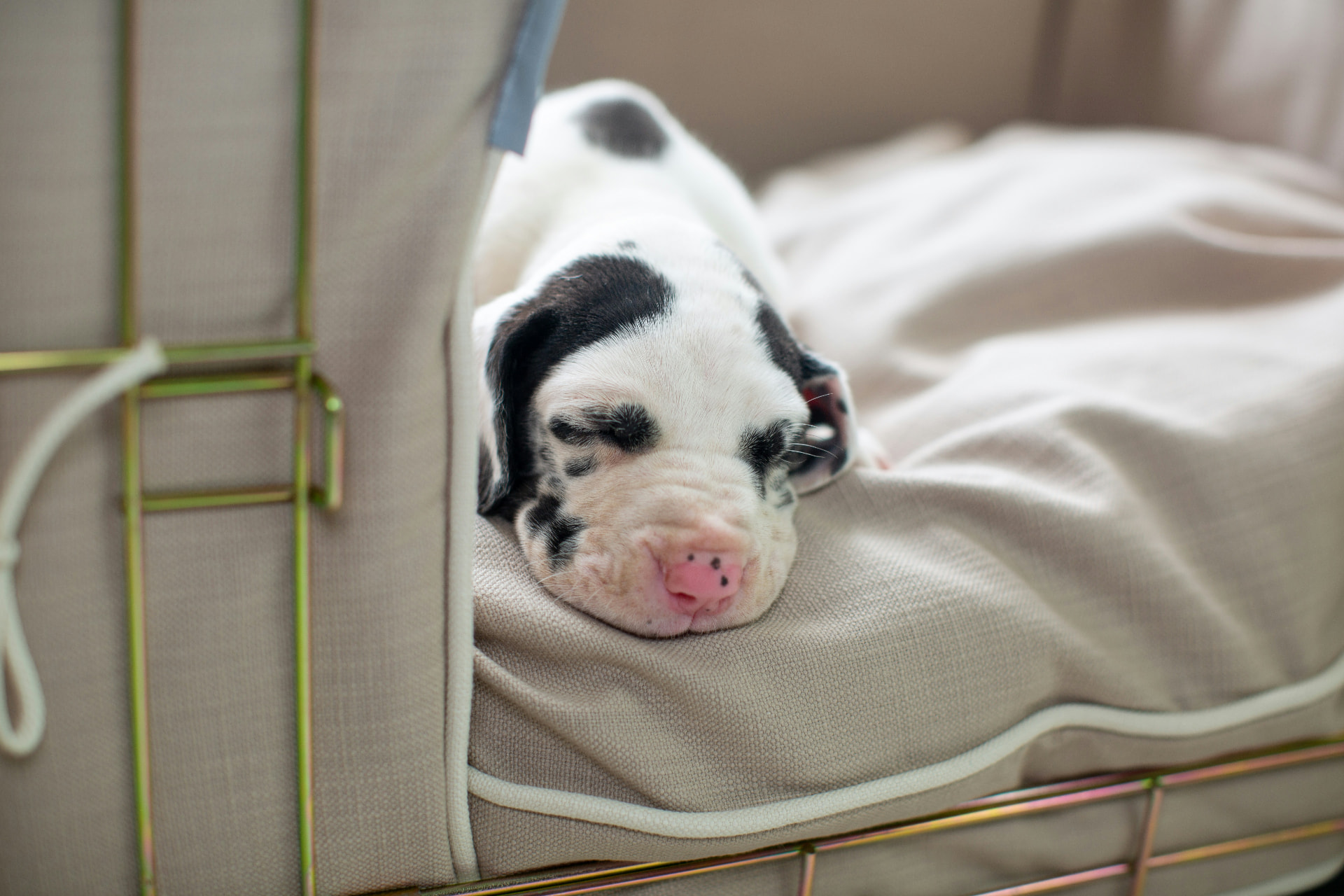
A Great Dane puppy often weighs about 30 to 45 pounds at 3 months, 70 to 100 pounds at 6 months and 90 to 135 pounds at one year, according to a chart shared by the Great Dane Club of Canada. The AKC lists adult males at 140 to 175 pounds and females at 110 to 140 pounds. Many keep filling out until about two years old, and individual puppies vary.
Great Dane puppy weight and height by month
These ranges come from a growth chart compiled by JP Yousha and published by the Great Dane Club of Canada. They are wide on purpose. Two healthy littermates can sit at opposite ends of the same row.
- 2 months: 18 to 27 lb, 13 to 17 inches
- 3 months: 30 to 45 lb, 17 to 22 inches
- 4 months: 50 to 65 lb, 21 to 25 inches
- 5 months: 65 to 85 lb, 25 to 30 inches
- 6 months: 70 to 100 lb, 27 to 33 inches
- 7 months: 75 to 110 lb, 27 to 33 inches
- 8 months: 80 to 115 lb, 27 to 34 inches
- 9 months: 85 to 120 lb, 28 to 34 inches
- 1 year: 90 to 135 lb, 28 to 36 inches
How big does a full-grown Great Dane get?
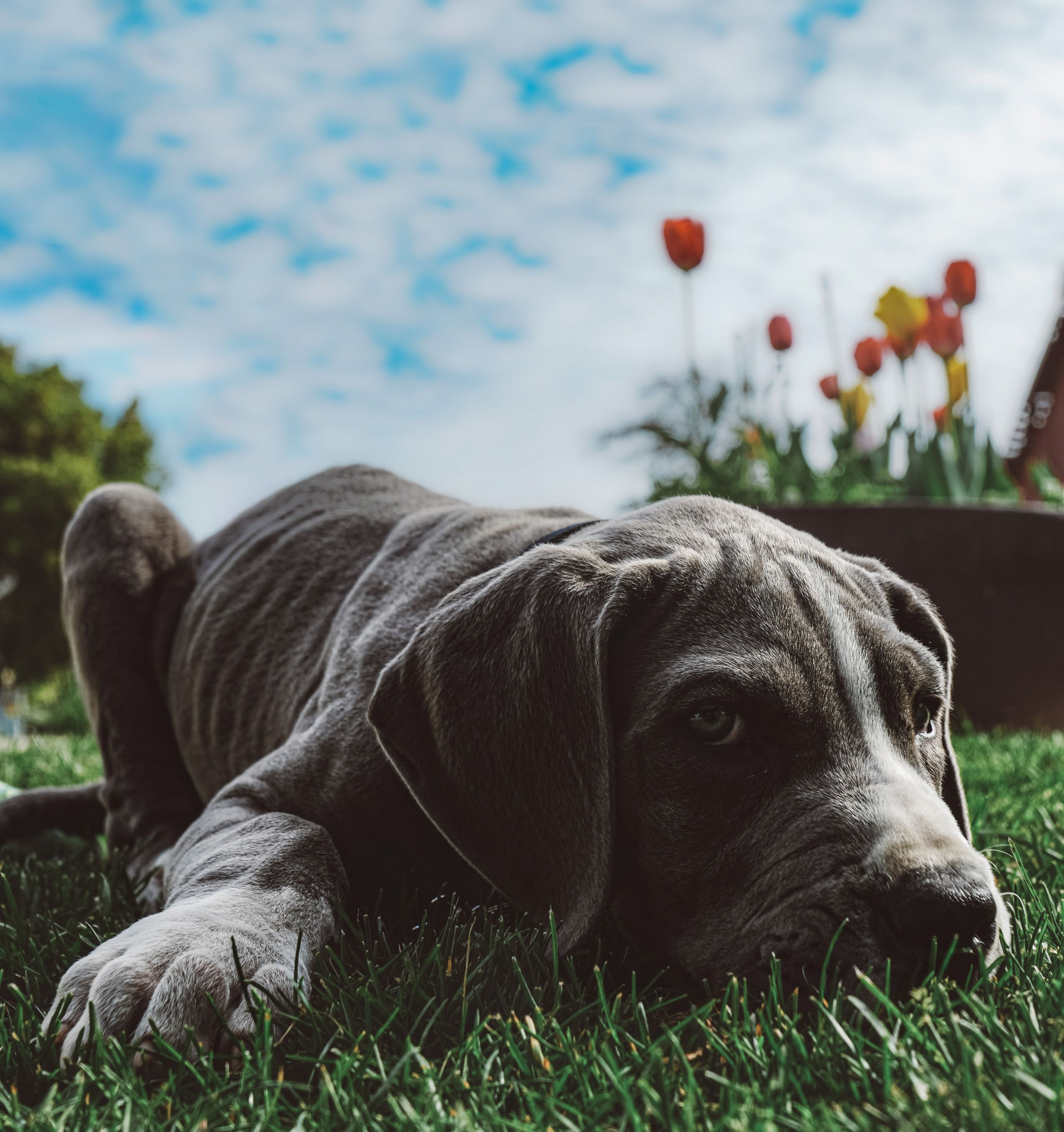
The American Kennel Club lists males at 30 to 32 inches tall at the shoulder and 140 to 175 pounds, and females at 28 to 30 inches and 110 to 140 pounds. The club chart above gives slightly different adult figures, which is a good reminder that these are guides, not targets.
If your dog lands outside either range, that alone doesn't mean something is wrong. Body condition, meaning how your dog carries that weight, tells your veterinarian more than the number on the scale.
When do Great Danes stop growing?
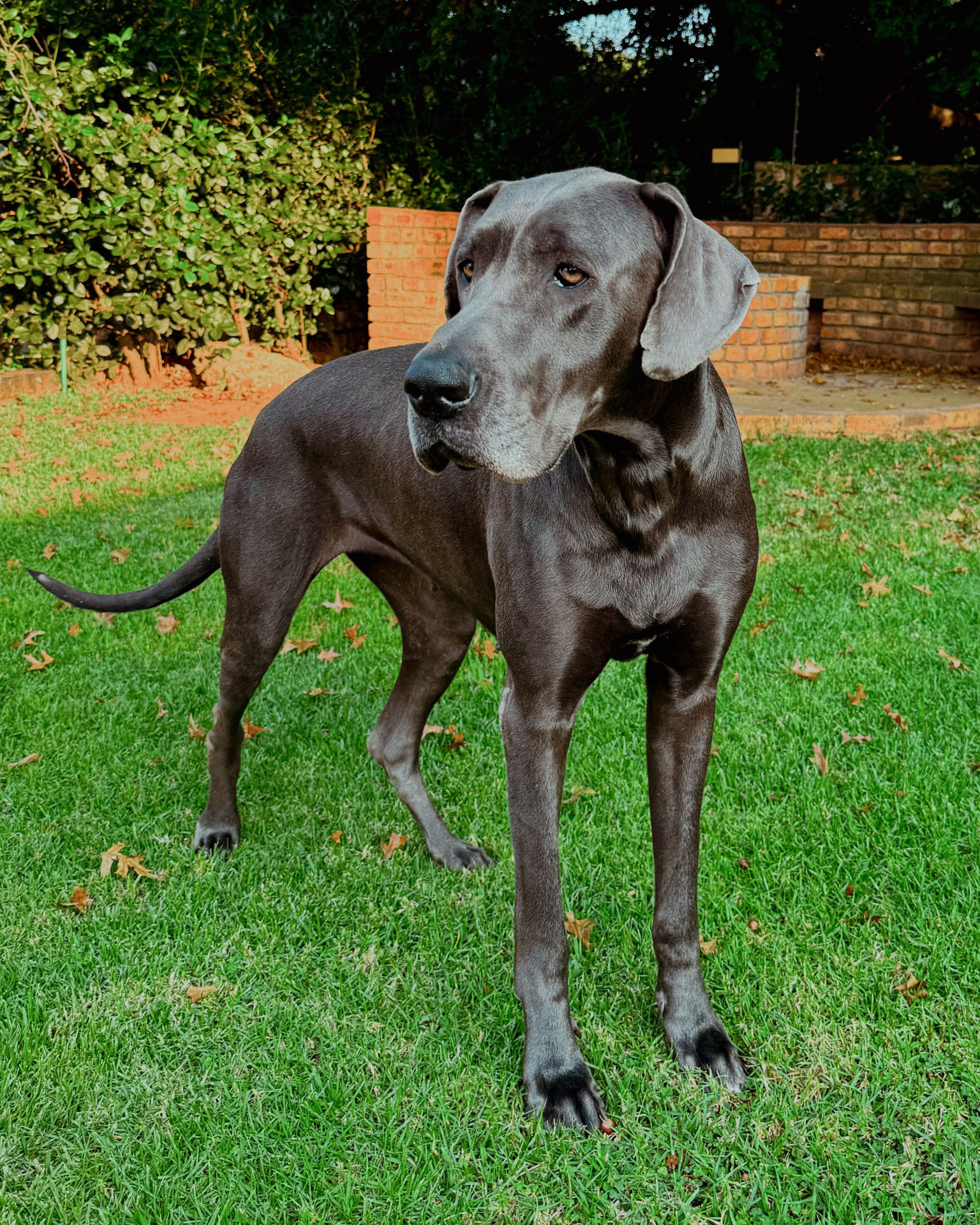
Height tends to level off first, and the rest takes longer. The Great Dane Club of Canada says the breed doesn't fully mature until about two years of age or older. The AKC's chief veterinary officer notes that growth plates in large and giant breeds can close as late as 16 to 18 months, compared with 6 to 9 months in toy dogs.
That longer window is why many owners are told to avoid forced, repetitive exercise like jogging on pavement while a young Dane is still growing. Ask your veterinarian what activity suits your puppy's stage.
Faster isn't better
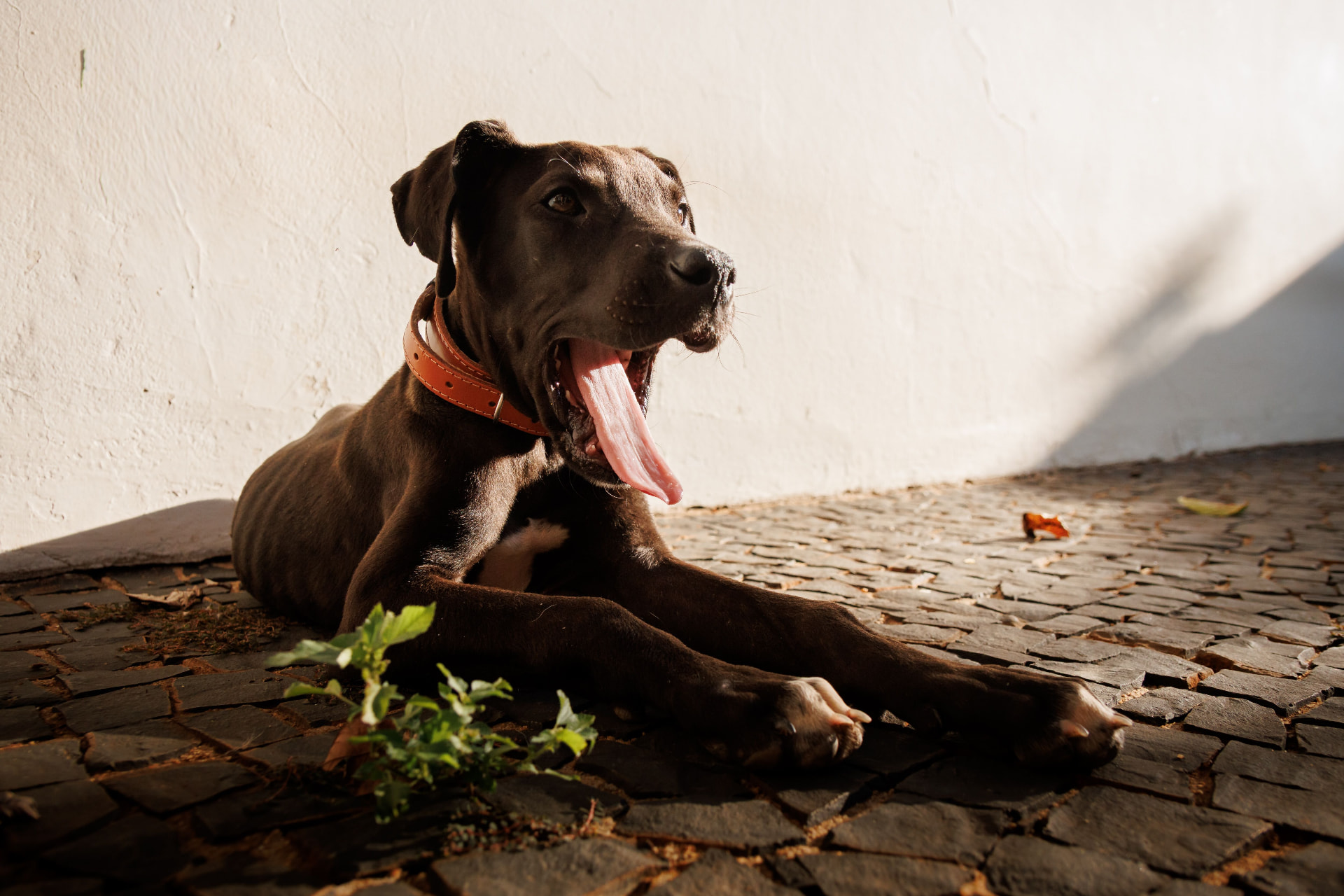
I'd be wary of treating the top of the chart as the goal. Rapid growth in giant breeds has been linked with bone and joint problems, and the AKC notes that excessive growth can contribute to musculoskeletal issues. Your veterinarian can help you choose a large or giant-breed puppy food and feeding amount, and check that your puppy is growing steadily rather than quickly.
Why growth matters for insurance
A fast-growing puppy is also the one most likely to limp after a rough play session, and giant-breed puppies can face orthopedic concerns. If you're thinking about coverage, the puppy stage is when a clean medical record is easiest to keep, because a problem noted before a policy starts may be treated as pre-existing.
That doesn't mean you need to rush. It means it's worth reading how a policy handles hip dysplasia, orthopedic waiting periods and hereditary conditions before you choose.
- Check whether the policy has a separate orthopedic waiting period.
- Ask how hereditary and congenital conditions such as hip dysplasia are handled.
- Keep your puppy's growth and weight notes from each vet visit together.
Frequently asked questions
How much should a 6-month-old Great Dane weigh?
The Great Dane Club of Canada chart lists about 70 to 100 pounds at 6 months. Healthy puppies can fall outside that range, so ask your veterinarian about your puppy's body condition rather than aiming for a number.
At what age is a Great Dane full grown?
Many reach close to adult height in their first year or so, but the Great Dane Club of Canada says they don't fully mature until about two years of age or older.
Is my Great Dane puppy too small or too big?
A single weigh-in rarely answers that. Your veterinarian can compare growth over several visits and look at body condition, which is more useful than any breed chart.
Do male Great Danes grow bigger than females?
Generally, yes. The AKC lists adult males at 30 to 32 inches and 140 to 175 pounds, and females at 28 to 30 inches and 110 to 140 pounds, though individual dogs can fall outside those ranges.