Quick answer
Pet insurance may be worth considering for a Great Dane if a large, unexpected vet bill would be difficult to pay at once. It may be less useful if you can comfortably self-fund care and prefer to take that risk yourself. The decision turns on your savings, the premiums you are quoted, and what the actual policy excludes, not the breed name alone.
The question behind the question
When someone asks me if insurance is worth it, I hear a more personal question underneath: could we make a decision about care without the bill deciding for us? Some households have savings set aside for that moment. Others would rather pay a regular premium for the possibility of help with an eligible surprise. Neither approach is a measure of how much you care about your dog.
Insurance is not a savings account. You might pay premiums for years without making a claim. You might also make a claim and receive less than the invoice because of the deductible, your share of eligible costs, a limit or an exclusion. I would not buy a policy expecting it to pay for itself. I would ask whether the risk it may take off your shoulders is worth the price to you.
Why the Great Dane part matters
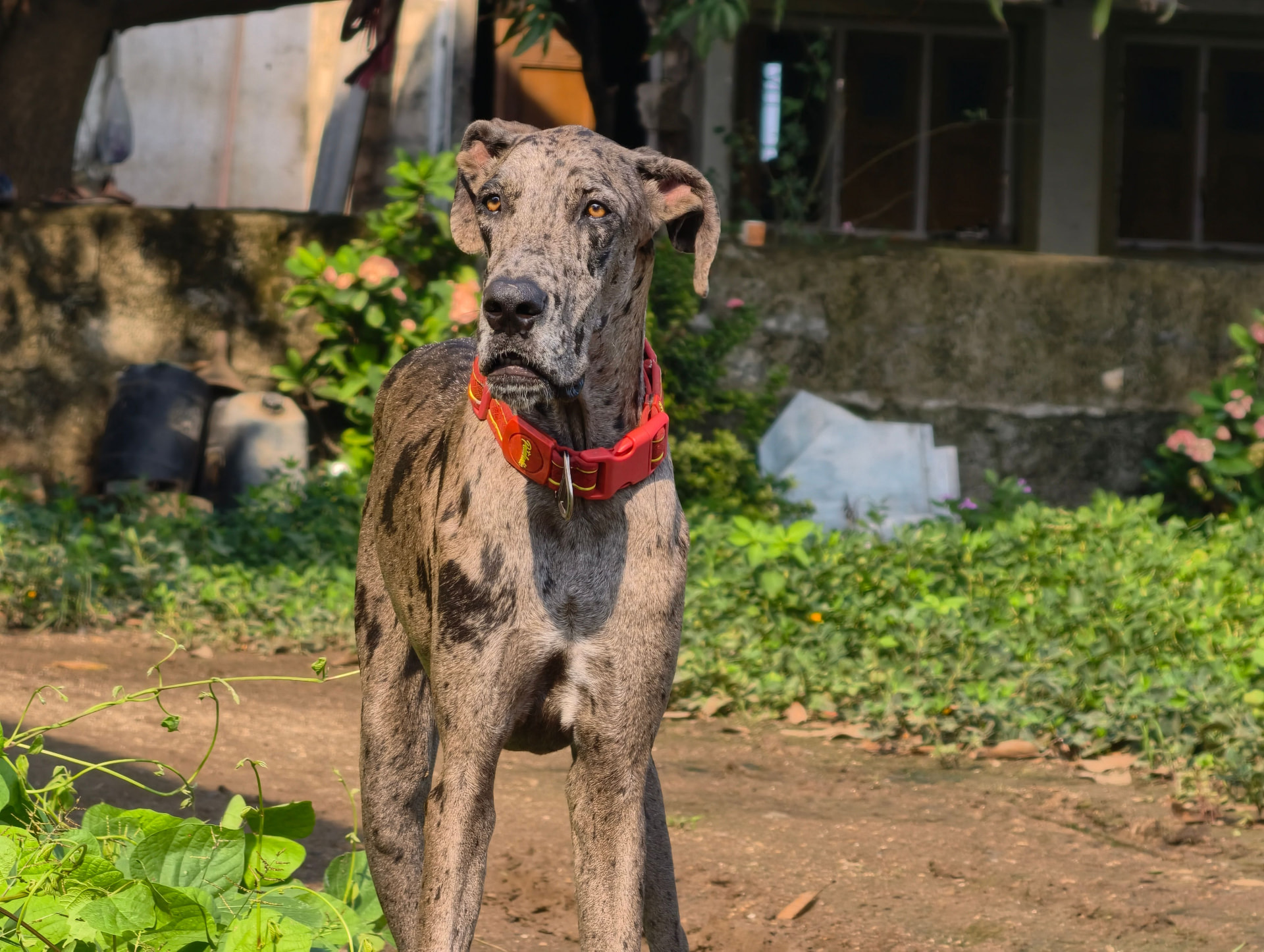
A Great Dane is a large, deep-chested dog. Gastric dilatation-volvulus (GDV), often called bloat, is a time-sensitive veterinary emergency associated with deep-chested breeds. That is one reason I would think seriously about access to emergency care. It is not a prediction about your dog, and I would not assume a policy pays for GDV treatment just because its marketing page mentions emergencies.
Other breed-related concerns, including orthopedic and heart conditions, make the fine print worth your time. Check how a plan defines pre-existing, hereditary and congenital conditions. Look at waiting periods and whether an orthopedic condition has separate rules. For health decisions or symptoms, talk with your veterinarian, not this website.
First, look at the money you actually have
Before opening a quote form, take a quiet look at your emergency fund. Could you pay a significant veterinary invoice without putting rent, groceries or other essentials at risk? Would you be comfortable rebuilding that fund afterward? There is no universal dollar amount to use here, and I will not make one up for you.
- If you could cover a surprise bill, self-funding may be a reasonable choice. Set aside money intentionally rather than assuming it will be there later.
- If paying a large bill at once would be hard, a policy may help with eligible costs, but you still need money for the upfront payment and any amount it does not reimburse.
- If a monthly premium would strain the same budget, compare that trade-off honestly too. A policy should not make everyday care harder to afford.
Then put the quote beside the contract
A low-looking premium cannot tell you whether the policy fits. Get a quote for your dog's age and location, then open the sample policy that applies where you live. The quote is an estimate; the policy explains the rules. Terms, prices and availability can change.
Pay attention to the deductible, reimbursement percentage, annual limit, waiting periods and what counts as a pre-existing condition. Ask whether exam fees and emergency diagnostics are eligible. If your dog has a symptom or prior medical note, ask the insurer how its rules apply before you rely on an assumption.
- Compare like with like: use the same deductible, reimbursement choice and annual limit when possible.
- Check what you would owe before reimbursement and whether you would pay the veterinarian first.
- Read the sections on hereditary conditions, bilateral conditions and orthopedic waiting periods.
- Keep routine care separate. Wellness add-ons usually serve a different purpose from accident-and-illness insurance.
Try three outcomes, not one rosy example
Imagine a year with no claim. You paid the premiums for the possibility of protection, not a refund. Now imagine an eligible emergency: your share may include the deductible, the portion not reimbursed, and any amount above the policy limit. Finally, imagine the condition is excluded. In that case, the policy might not help with that bill at all.
That last scenario is uncomfortable, but it matters. A condition noted before coverage begins or during a waiting period may fall under the policy's pre-existing condition rules. Whether it does depends on the contract and the facts of the claim. A quote alone cannot answer that question.
Where I land
I see insurance as a way to manage uncertainty, not a way to win a bet against your dog's health. If a surprise bill could force a painful choice, it is worth reading actual policies and seeing what they cost for your Great Dane. If you have a solid reserve and prefer to keep the risk yourself, that can also be a thoughtful decision.
I would make the call with a real quote, the state-specific policy, and an honest picture of your own finances on the table. You do not have to decide because a website tells you to. This one included.
Frequently asked questions
Is pet insurance worth it for a healthy Great Dane puppy?
It can be worth comparing while a puppy has fewer documented health concerns, because pre-existing condition rules may affect later claims. That does not make enrollment the right choice for every family. Check the waiting periods, exclusions and premium against your own budget.
Will pet insurance cover bloat or GDV?
An accident-and-illness policy may address eligible GDV treatment, but the answer depends on its terms, waiting periods and medical history. Ask the insurer about your specific policy. If you suspect GDV, seek emergency veterinary care immediately.
Is it better to save money instead of buying a policy?
Self-funding can make sense if you can set aside and access enough money for an unexpected bill. Insurance trades a known premium for possible help with eligible expenses. Neither approach removes all financial risk.
Does a higher premium mean better coverage?
Not necessarily. Compare the policy terms, limits, exclusions and your remaining share of a claim, not just the premium. Quotes also vary by your dog's details and location.